Infant Car Seat vs. Convertible: The Only Non-Negotiable on Your Registry
The one purchase you legally cannot skip: Dana's honest take on infant buckets vs. convertibles, two picks worth buying, and the travel-system bundle trap.

August 23, 2026 · Updated October 12, 2026
Affiliate disclosure
This guide contains Amazon affiliate links. As an Amazon Associate, newmomshop.com earns from qualifying purchases at no extra cost to you. Products are sold by Amazon or its third-party sellers, not by newmomshop.com. Dana's picks reflect independent editorial opinion; brands do not pay for placement or positive coverage. Read the full policy.
You need an appropriate car seat for the ride home. That makes it the true non-negotiable on your registry. Everything else can arrive late. The car seat cannot.
The decision you actually need to make is simple: infant bucket seat or convertible from birth. There is no wrong answer between these two. There is a wrong answer of not deciding until your due date and grabbing whatever’s in stock.
The case for an infant bucket seat
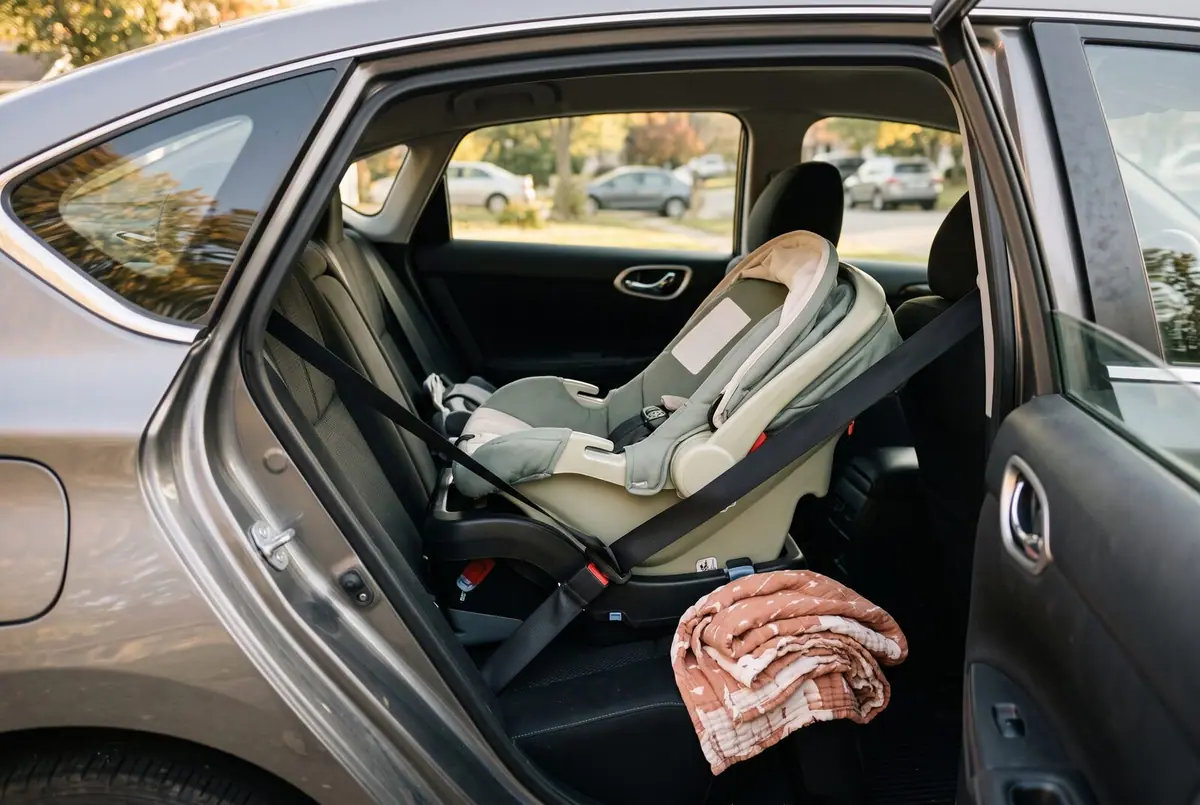
An infant-only seat is a detachable carrier: it clicks onto a base in the car, unclicks to carry the baby, and snaps back in. For the first several months, this is genuinely useful in ways you don’t appreciate until you’re doing it:
You can move a sleeping newborn from car to stroller without waking them (with the right adapter on your stroller). You can carry the seat into a restaurant, a pediatrician’s waiting room, anywhere. The bucket is lighter than a convertible and the angle adjustment for a tiny newborn is simpler.
The tradeoff is real: infant seats have weight and height limits, and your baby will eventually hit one of them. Follow the limits printed on your specific seat. When your child reaches either limit, you will need the next appropriate seat.
If you want the convenience and you’re okay buying twice, the infant seat is the right call.
The bucket I’d buy: Chicco KeyFit 35 Zip
The Chicco KeyFit 35 Zip is the infant seat I’d put on a registry without spending another minute researching. The reason is specific: it installs correctly more reliably than almost anything else in its class. The base has a bubble level and the click-in is audible, so you know when it’s seated, you know when it’s not. For a process where correctness is the only thing that matters, “reduces installation error” is worth more than any feature comparison.
The weight limit runs to 35 lbs, which is more runway than many 30-lb seats. It is compatible with many strollers through a model-specific adapter sold separately. It is not cheap. It is worth the price if the install and fit work for your vehicle.
The case for going straight to convertible
A convertible installs rear-facing for infants, flips to forward-facing as the kid grows, and converts to a high-back booster and eventually a backless booster. One seat, from birth until your child doesn’t need a booster, usually somewhere around age 8–10.
The practical tradeoff: the seat never leaves the car. You carry the baby, not the baby-in-a-seat. You don’t have click-in/click-out convenience. The seat is bulkier, and the angle adjustments for a two-week-old in a large convertible take more care than with an infant bucket. None of this is a safety issue. It’s a convenience difference.
For families who drive rarely, live somewhere walkable, or just don’t want to deal with buying twice, the convertible from birth is the cleaner path.
The convertible I’d buy: Graco 4Ever DLX
The Graco 4Ever DLX does what it says: four stages, one seat, from infant through high-back booster. The math works out to significantly cheaper than buying three separate seats across those years, and the steel-reinforced frame holds up to years of use in a way that cheaper convertibles don’t.
It is bulkier than an infant bucket in month one. That’s the whole tradeoff and it’s real. If it doesn’t fit your back seat well with the angle that works for a newborn rear-facing, the infant bucket path may make more sense for your specific vehicle. Check fit before committing.
The one I’d skip: travel system bundles
A “travel system” bundles a car seat and a stroller together at a package price. The pitch is convenience: everything matches, one purchase. The reality is that the bundled travel system car seat is chosen for brand compatibility, not because it’s the best car seat in its class. Same for the stroller.
Buy the car seat that installs correctly in your vehicle and fits your use case. Buy the stroller that fits how you actually live. Then connect them with a compatible adapter. Check the compatibility chart for both products before buying. You end up with two pieces of gear you chose for their own merits rather than two that chose each other.
(If you haven’t picked a stroller yet, the stroller guide covers that separately: different decision, different tradeoffs.)
Before you use it: the installation check
Car-seat installation errors are common. A nationally representative NHTSA study found that 46% of car seats and boosters had at least one major installation or use error that could reduce protection in a crash. NHTSA recommends choosing the right restraint and getting help from a certified child passenger safety technician.
Get a certified car-seat technician check. Many inspection stations offer help at no cost. Find one in the car seat inspection station finder, built from NHTSA’s station list and organized by state and city. Call to confirm the schedule, and bring both the seat and vehicle manuals. A technician can check the angle, harness fit, chest clip position, and anchor routing.
Install the base before your due date. Give yourself time to get the check done before you’re at the hospital needing to go home. If you’ve never done one, here’s what happens at a car seat check.
Taking a hand-me-down seat instead?
A used seat can be fine, but only with a known history. Before you say yes, find out whether it’s expired, whether it’s ever been in a crash, and whether it’s recalled: the full list is in is a used car seat safe? The rest of the questions that come up after you own a seat, like when to turn it forward-facing and puffy winter coats, are in car seat questions, answered.
The car seat is Priority 1 on the registry checklist. If you’re building your list and want the full priority-ordered view of what to buy when, start there.
KeyFit Max Zip Infant Car Seat
Chicco · Available on Amazon
The infant bucket seat that installs correctly more often than almost anything else in its class. The bubble level and audible click on the base remove the guesswork from a process that should have no guesswork. This is the successor to the KeyFit 35 (that model's been phased out) with the same easy-install DNA and a higher weight limit than most infant seats.
- Easiest correct installation in the category
- Compatible with most strollers via adapter
- Higher weight limit than standard 30-lb infant seats
- Outgrown well before toddlerhood, you will need a convertible eventually
- Adapter sold separately for most strollers
4Ever DLX 4-in-1 Car Seat
Graco · Available on Amazon
Grows with the kid from infant through booster, so you buy one car seat instead of three. Convertible seats always feel bulkier than infant-only buckets in the early months, and that's the tradeoff for not re-buying later.
- One seat, infant to booster
- Saves money over 3 separate seats
- Steel-reinforced frame
- Bulkier than an infant-only seat in month one
- Heavier to carry between cars
"Travel system" car seat + stroller bundles
various
The bundled car seat is rarely the seat you'd choose on its own. It's whatever the stroller brand has a manufacturing agreement with. Buy the best car seat for your car and your use case, then find the stroller adapter separately.
- Bundles you into a car seat chosen for brand compatibility, not performance
- Stroller in the bundle often not competitive at the price point
- A $30 adapter does the same job for most car seat + stroller combos
Questions parents ask before buying
Infant bucket seat or convertible from birth, which do I actually need?
Choose an infant bucket if you want snap-in, snap-out convenience for the newborn months. Switch when your child reaches the seat's height or weight limit. Choose a convertible from birth if you would rather buy once; the tradeoff is a bulkier, non-portable seat. Either type can be appropriate when it fits the child and vehicle and is installed and used correctly.
Do I really need a car-seat technician installation check?
Yes. A nationally representative NHTSA study found that 46% of car seats and boosters had at least one major installation or use error. Many inspection stations offer checks at no cost; confirm the schedule and any fee with your local station.
Should I buy a travel system, car seat and stroller bundled together?
Generally no. The bundled car seat is chosen for brand compatibility, not for performance in its own right. Buy the car seat that installs correctly in your vehicle, then pick a stroller independently and confirm adapter compatibility before ordering.