Safe sleep
The sleep gear that sells well and shouldn’t.
Swaddles, swings, bumpers, wedges, weighted blankets, the vintage crib from your aunt. What the American Academy of Pediatrics says about each one, in plain words. Every answer starts short and links the page it comes from.
The whole thing in four letters: A, B, C, D.
Alone in a dedicated sleep space (share a room, not a bed).Back to sleep, every nap and night. Crib, bassinet or play yard with a firm, flat mattress and nothing loose in it. Don’t smokearound your baby. That’s the AAP’s checklist;here’s the detail.
- Safe Sleep for NewbornsThe AAP boils safe infant sleep down to the ABCDs: Alone in a dedicated sleep space (share a room, not a bed), on the Back, in a Crib, bassinet or play yard with a firm, flat mattress and nothing loose in it, and Don't smoke around your baby. Follow it for naps as well as nights. Everything else on this page is a detail of those four.Read the full answer →
- Can a Newborn Sleep in a Swing, Bouncer or Car Seat?No. The AAP says swings, rockers, bouncers and gliders are safe when used as directed but not for sleep, because the upright or inclined position can drop a sleeping baby's head forward or sideways and make it hard or even impossible to breathe. If your baby falls asleep in one, or in a car seat outside the car, move them to a firm, flat sleep surface as soon as you can.Read the full answer →
- When to Stop SwaddlingStop swaddling as soon as your baby shows any signs of trying to roll over. The AAP says some babies start working on rolling as early as 2 months, but every baby is different, so watch the baby, not the calendar. Sleep sacks that wrap the arms, chest and body count too; a sleep sack that lets your baby move freely can be used as long as you want.Read the full answer →
- How to Swaddle SafelySwaddle with a thin blanket, put your baby down on their back, and keep the wrap loose enough that their hips can bend up and out and you can fit two or three fingers between their chest and the swaddle. The AAP also warns swaddling can lead to overheating: sweating, damp hair, flushed cheeks, heat rash and rapid breathing mean your baby is too hot.Read the full answer →
- Inclined Sleepers, Wedges and Sleep PositionersSkip them. The Safe Sleep for Babies Act bans inclined sleepers that lift a baby's head more than 10 degrees, and the AAP says sleep positioners (bolsters, wedges, mats) have been linked with multiple deaths, with no evidence that they prevent SIDS or flat head syndrome. The safest sleep surface is firm, flat, with your baby on their back and nothing loose.Read the full answer →
- Crib Bumpers and Mesh LinersNo. Crib bumpers that snap, button or tie onto the rails are banned under the Safe Sleep for Babies Act, and the AAP says mesh crib liners aren't necessary either. Modern cribs must have narrow slat spacing, which is the problem bumpers were supposed to solve. Liners can work loose and suffocate or trap a child, and toddlers have used them to climb out.Read the full answer →
- Nursing Pillows and Infant LoungersNever let a baby sleep on a nursing pillow or an infant lounger. The AAP says hundreds of babies have died in nursing pillows and that infants have suffocated sleeping on loungers. If you use a nursing pillow, pick a firm one with straight edges, and move your baby to a dedicated sleep space as soon as the feed ends. Limit lounger use to waking hours.Read the full answer →
- Are Weighted Swaddles and Weighted Blankets Safe for Babies?No. The AAP says not to use weighted swaddles or weighted blankets with babies. Weight can put too much pressure on a baby's chest and lungs, make it harder to breathe, and trap a baby under a heavy blanket. To keep a baby warm, use a properly fitted wearable blanket or sleep sack instead.Read the full answer →
- What to Put a Baby In to Sleep Instead of a BlanketA wearable blanket or sleep sack, over layers of regular sleep clothing. The AAP says sleep clothing is preferred to blankets and other coverings, and that the crib should stay free of loose bedding and soft objects: no blankets, pillows or stuffed animals. Watch for sweating, damp hair, flushed cheeks, heat rash or rapid breathing, which can mean your baby is too hot.Read the full answer →
- Is a Used or Vintage Crib Safe?Probably not, if it's old. The AAP says vintage cribs and cradles don't meet the U.S. safety standards adopted in 2021 and updated in 2026, including a full ban on drop-side cribs. It also warns against extra-plush mattresses sold separately from the crib, and against mini-bassinets or baskets that don't meet infant sleep safety standards.Read the full answer →
Gear that holds up
Fewer sleep products, chosen on purpose.
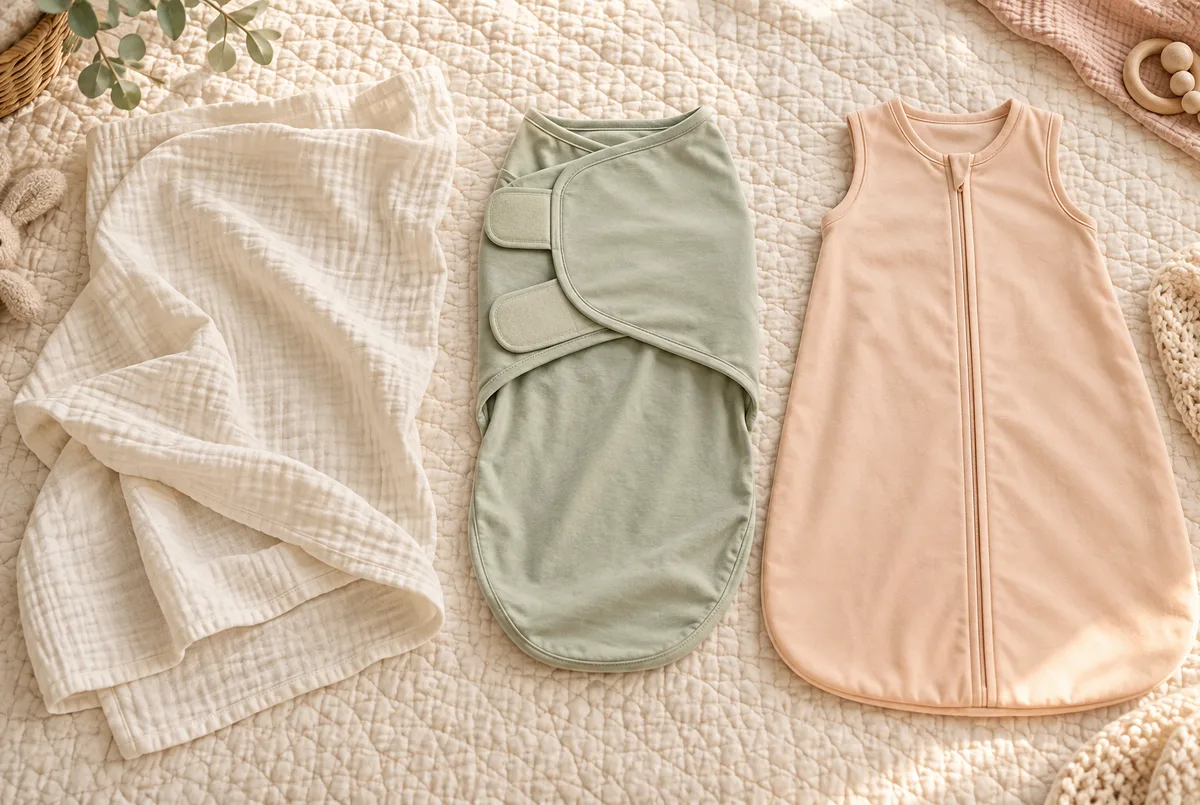
Swaddles and Sleep Sacks: What to Buy, and When to Switch
A practical newborn swaddle pick, an arms-out sleep sack for the transition, and the blanket collection you can leave off the registry.
Read the guide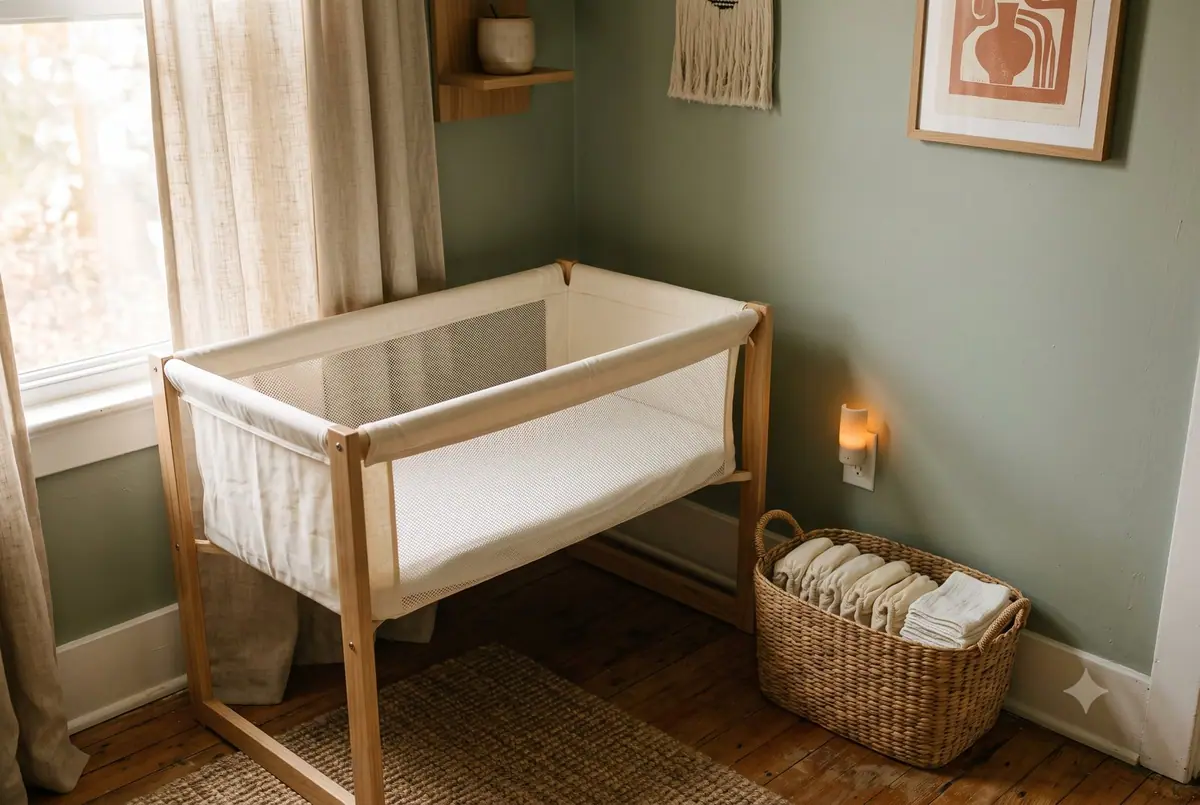
Nursery Must-Haves (and the Stuff You Can Skip)
The nursery gear that makes nights easier, the one expensive monitor that may be worth it, and the products Dana would leave at the store.
Read the guideBuilding the whole list? The registry builder sorts nursery gear in with everything else by what to buy now, what can wait, and what to skip.
Dana is a parent, not a pediatrician. These pages explain public guidance from the American Academy of Pediatrics (HealthyChildren.org); they are not medical advice. Your pediatrician has the final word for your baby.