Swaddles and Sleep Sacks: What to Buy, and When to Switch
A practical newborn swaddle pick, an arms-out sleep sack for the transition, and the blanket collection you can leave off the registry.

Affiliate disclosure
This guide contains Amazon affiliate links. As an Amazon Associate I earn from qualifying purchases at no extra cost to you. Products are sold by Amazon or its third-party sellers, not by newmomshop.com. Dana's picks reflect independent editorial opinion; brands do not pay for placement or positive coverage. Read the full policy.
Some newborns Houdini their way out of a muslin wrap by week two. Then their parents buy three more blankets before realizing the problem is the closure, not the print. If that sounds familiar, put one fastening swaddle on the registry, plus an arms-out sleep sack for later. You do not need a drawer full of matching squares.
The three types, without the marketing fog
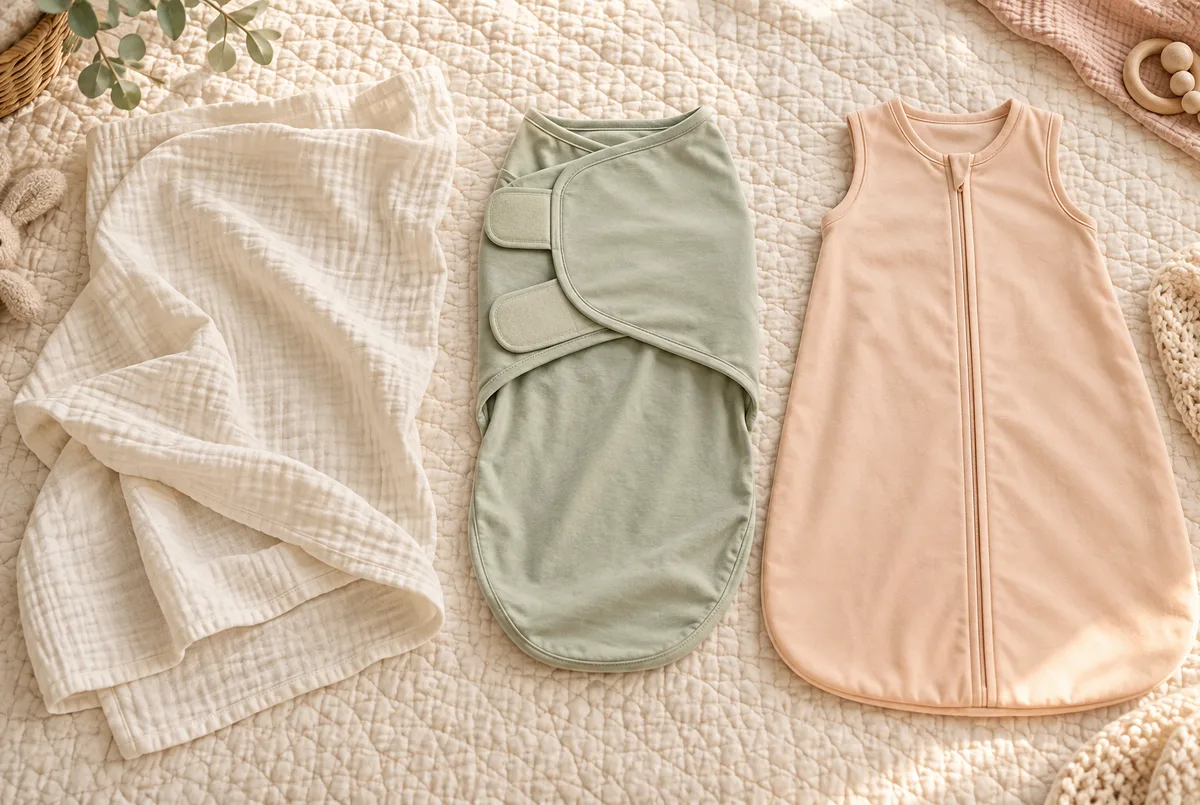
Stretchy muslin wrap: Usually the cheapest way to start. It is a blanket you fold and tuck yourself, so there is a learning curve, especially during a night change. If it comes loose, it is loose fabric in the sleep space; rewrap securely or choose a different style. Buying more prints will not make the fold hold.
Hook-and-loop or snap swaddle: Fastens around the baby instead of relying on your tucking skills. It is faster to put back on and can be harder for an active newborn to escape, though no closure guarantees a secure fit. Check the size chart and the maker’s fastening instructions. If your baby keeps getting free, do not leave a loose swaddle around them.
Zippered sleep sack: Look for an arms-out wearable blanket, not merely a zipper. Some zippered products still hold the arms in and are swaddles. The arms-out kind is the straightforward next layer once swaddling ends, with no loose blanket to tuck into a crib or bassinet.
Newborn pick: HALO Cotton SleepSack Swaddle
The HALO Cotton SleepSack Swaddle has adjustable fastening wings and a zipper for diaper changes. That is the practical answer when a hand-wrapped blanket keeps coming undone. It is still a swaddle, with the same short window of use. Buy the size that fits your baby now; do not size up for a future month. The fasteners can be loud, and strong babies can still work loose, so check the fit every time.
An Ollie or another premium wrap may appeal if you like its fabric and fastening layout, but I would start with one functional swaddle before paying for a more expensive system. The closure matters more than a coordinated nursery look.
Transition pick: HALO Cotton SleepSack Wearable Blanket
The HALO Cotton SleepSack Wearable Blanket is the separate, sleeveless, arms-out version. Its zipper makes changes simple, and the cotton sack adds a layer without a loose blanket. Check the size chart and choose clothing and fabric weight for the room temperature rather than piling on layers. This pick is a wearable blanket, not the HALO swaddle worn with its wings in another position.
When the swaddle phase ends
The American Academy of Pediatrics says to stop swaddling as soon as a baby shows signs of trying to roll. Do not wait for a completed roll or a calendar milestone. For every sleep, place your baby on their back on a firm, flat sleep surface without loose bedding. Once the swaddle is done, use a properly sized, non-weighted sleep sack that lets the arms and body move freely. A sleep sack that still restrains the arms or compresses the chest does not solve the transition problem. Follow the manufacturer’s current instructions; your pediatrician can help with questions specific to your baby.
More on this in the safe sleep questions: how to swaddle safely, when to stop, and why weighted swaddles are out.
Skip: the twelve-pack of matching muslin blankets
Two to four functional swaddles or sleep sacks give you a spare for laundry without turning the registry into a textile collection. Start smaller, see whether your newborn tolerates swaddling, and buy another of the style that actually works. The prints are cute. They are not a plan for a 2am escape artist.
Cotton SleepSack Swaddle, Newborn
HALO · Available on Amazon
The fastening wings make a middle-of-the-night rewrap much simpler than folding a loose blanket. Check the newborn size chart before ordering; the swaddle phase can be short.
- Adjustable hook-and-loop wings
- Zipper for diaper changes
- Room for legs to move
- Fasteners can be noisy
- Stop using the swaddle configuration at the first signs of rolling
Cotton SleepSack Wearable Blanket, Small
HALO · Available on Amazon
An arms-out, zippered wearable blanket for the point when wrapping arms is done. It does the useful job of adding a layer without a loose blanket in the sleep space.
- Arms stay free
- Bottom zipper for changes
- Machine-washable cotton
- Check size and room temperature before choosing a fabric weight
Matching swaddle blanket collections
various
A dozen matching squares take up a drawer without making night changes easier. Start with two to four functional swaddles and see what your baby tolerates.
- More pieces than most families need
- Matching prints do not improve the closure or fit
Questions parents ask before buying
When do I stop swaddling and switch to a sleep sack?
Stop swaddling as soon as your baby shows signs of trying to roll, even if that is earlier than you expected. Switch to a properly sized, non-weighted, arms-out sleep sack that does not compress the arms or chest. Follow the product instructions and ask your pediatrician about your baby's situation.
Is a Velcro swaddle better than a zippered sleep sack?
They do different jobs. A hook-and-loop swaddle holds a newborn's arms for the short swaddling phase; an arms-out zippered sleep sack is a wearable layer after swaddling ends. A zippered product that still holds the arms in is still a swaddle.